
Suicide with a firearm is a major problem in this country. Nearly 27,000 people die by firearm suicide in the U.S. each year, and 55 percent of all suicides involve a gun.1 Access to a gun also triples a person’s chances of dying by suicide.2 But there are things you can do to help stop this deadly epidemic, including sharing the following information with friends, family members, and others in your community.
If you or someone you know is in crisis, text 988 or visit 988lifeline.org/chat.
It is a common misconception that if someone doesn’t have access to a gun, they will find another way to end their life. Research shows that suicidal crises are often short-lived, sometimes only lasting minutes or an hour, and people who do not have access to a gun — the most lethal means of suicide — are less likely to die by suicide.
The vast majority of those who survive a suicide attempt do not go on to die by suicide,3 but when a gun is involved, the person rarely gets a second chance. Of suicide attempts using a gun, 90 percent result in death.4
Know the Warning Signs
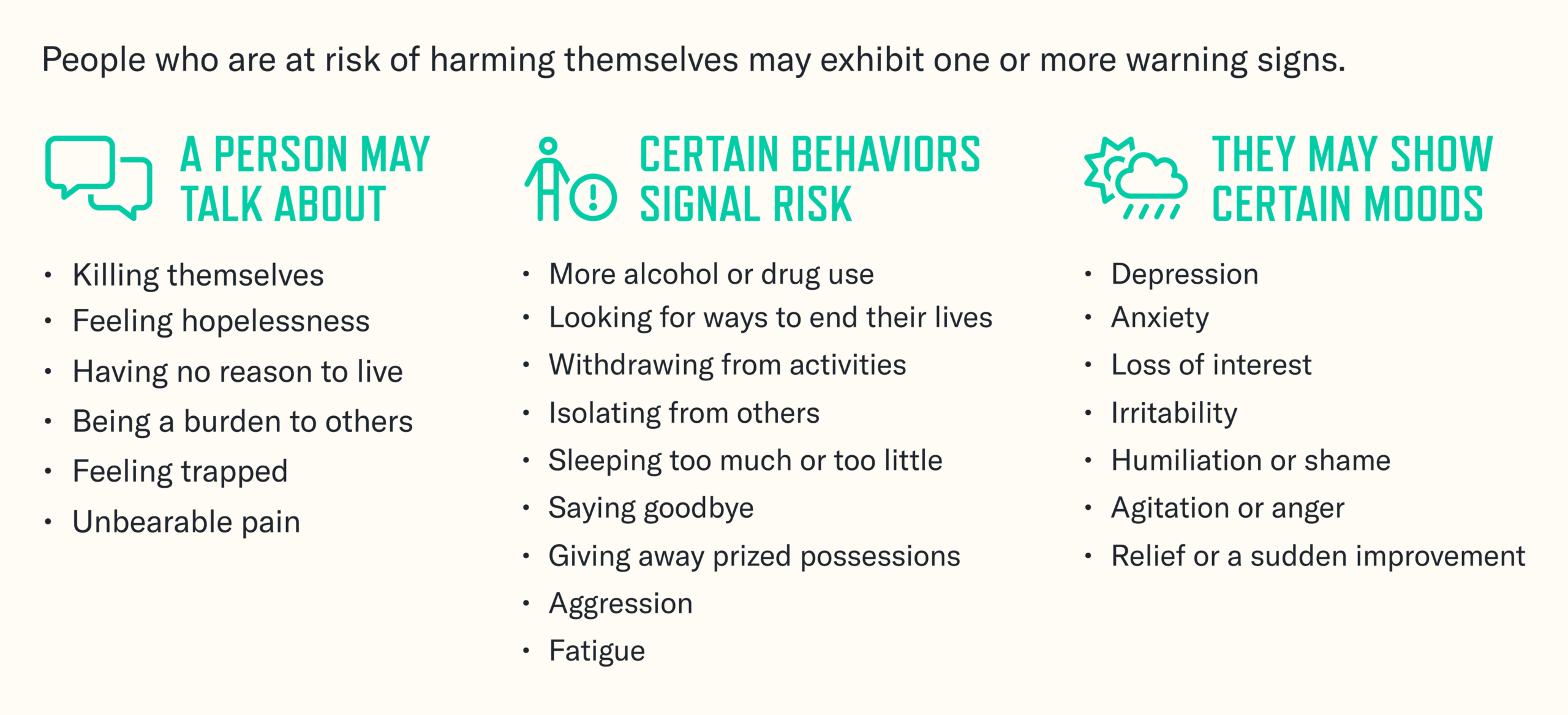
Some of the suicide prevention tools below will be more effective than others depending on the situation at hand, including who is involved, how many people live in the home, how many guns are owned, and who has access to them. There are many variables to consider. Our goal at Train SMART is to show you all of the tools available so you can find the one that works best for your situation.
If You Need Help…
If you’re a gun owner and have thoughts of suicide or problems with mental health, there are a few different ways to create time and space for yourself to get the care and treatment you deserve.
Give the Keys
One option is to remove your access to your home’s gun safe, or “give the keys” to someone else, so to speak. Have a friend or family member reset or reprogram your gun safe so that only their fingerprints, combination, or keycode will open it. Or literally hand over the keys to the safe. This method is risky, however, because the safe is still located in your home.
For this strategy, do not rely on cable or trigger locks alone, as they are too easy to defeat in a moment of crisis. Instead, make sure that you invest in a solid steel safe. To learn more, click here.
Give Yourself Time and Space
The best solution is removing the gun from your home, either temporarily or permanently.
- A law enforcement agency may also be able to store your gun temporarily, or you could relinquish it to them. Call the agency to schedule an appointment and follow their procedure for safely surrendering the unloaded gun.
- Consider giving the gun to a friend or family member (what we call a “natural helper”). Just make sure that you transfer the gun legally wherever you live. Your friend or family member might have to pass a background check at a gun shop or obtain a permit before they can take possession of the gun.
- A gun shop may be able to store your gun temporarily, or you could sell it to them. Many pawn shops are also licensed gun dealers.

Find Out-of-Home Storage Options in Your State
Opt Out of Gun Sales
After you have removed a gun from your home, a few states, including Delaware, Utah, Virginia, and Washington, also allow you to add your name to a “voluntary prohibitor” list, preventing you from purchasing another gun from a licensed dealer as long as you are on the list. This is also a good idea if you haven’t purchased a gun yet but are likely to do so. It’s another safeguard that you might consider layering in with the other options discussed here.
If Someone In Your Home is in Crisis…
If someone in your home is at risk of harming themselves or others, many of the same strategies apply, but there are some key differences.
Lock It Up
If you decide to keep the gun in your home, you must secure it in the sturdiest, most secure gun safe you can afford. Completely unload the gun, lock it in the safe, and then store all of your ammunition in another location. That way if someone does gain access to the gun, they won’t simultaneously have ammunition on hand to use it. Additionally, you should consider locking up the ammunition as well.
While this strategy might not be the best option for keeping a gun away from another adult in your home, it could deter children. Studies have shown that 79 percent of children and 44 percent of young adults die by suicide using a gun belonging to a family member.5
Create Time and Space
Removing the gun from your home, either temporarily or permanently, may be the best solution. Once again, natural helpers (friends and family members), gun shops, and law enforcement can be helpful resources.
- Give the gun to a friend or family member. Again, make sure you follow all applicable laws to legally transfer the gun.
- Ask a gun shop to store your gun temporarily or purchase it.
- Ask a law enforcement agency to store your gun temporarily or take possession of it.
Note: If the gun is owned by someone else in your home, ask for permission before you attempt to remove the gun.
Petition for Removal
Twenty-two states and Washington, D.C., have laws that allow family members, police, and/or medical professionals to petition a court for an extreme-risk order to temporarily remove a gun from someone who is at risk of harming themselves or others. The laws vary by state, but generally speaking, a judge will review the circumstances, and if they grant the order, police will remove any guns from a person’s residence for a limited duration. To learn more, click here.
If You Know Someone Else in Crisis…
If a friend or family member appears to be at risk of harming themselves, you — the natural helper — may be in a position to intervene or at least talk to those who can.
Ask for the Keys
If the person has invested in a solid steel gun safe, ask if you can become its sole authorized user. In other words, ask for the person’s keys to the safe, or reprogram it so that only your fingerprint, combination, or keycode will open it. Of course, this method carries some risk, as the person is still maintaining possession of the safe.
Ask for the Gun
Ask if you can take possession of the gun temporarily or permanently. Just make sure that you follow all applicable laws to legally take possession of the gun and secure it in your home to prevent theft and misuse.
You can also help find another home for the gun. Find out if a local gun shop will store the gun temporarily or purchase it from the person. A law enforcement agency may also be able to store the gun temporarily or take possession of it.
Share Information
Ensure the person’s family members know about secure storage, out-of-home storage, extreme-risk orders, and other tools that can give the person time and space to get the help they deserve.
Every intervention starts with having honest conversations with the person in need as well as their family members. Try to connect with them and come up with an action plan. You’re part of their safety net.
If you or someone you know is in crisis, text 988 or visit 988lifeline.org/chat. Additionally, the information provided here is not legal or medical advice and should not be understood as such. Consult with an attorney or healthcare professional if you have questions about how this information applies to your specific circumstances.
Endnotes
- Everytown Research analysis of Centers for Disease Control and Prevention, National Center for Health Statistics. WONDER Online Database, Provisional Mortality Statistics, Multiple Cause of Death (accessed December 16, 2025). Average: 2020 to 2024. ↩︎
- Andrew Anglemyer, Tara Horvath, and George Rutherford, “The Accessibility of Firearms and Risk for Suicide and Homicide Victimization Among Household Members: A Systematic Review and Meta-Analysis,” Annals of Internal Medicine 160, no. 2 (2014): 101–10, https://doi.org/10.7326/M13-1301. ↩︎
- Owens D, Horrocks J, House A. Fatal and non-fatal repetition of self-harm. Systematic review. British Journal of Psychiatry. 2002;181:193–199. ↩︎
- Conner A, Azrael D, Miller M. Suicide Case-Fatality Rates in the United States, 2007 to 2014: A Nationwide Population-Based Study. Ann Intern Med. December 2019:885-895. ↩︎
- Catherine Barber et al., “Who Owned the Gun in Firearm Suicides of Men, Women, and Youth in Five US States?” Preventive Medicine 164 (2022): 107066, https://doi.org/10.1016/j.ypmed.2022.107066. ↩︎